The Juli Zeh landscape
Hi there,
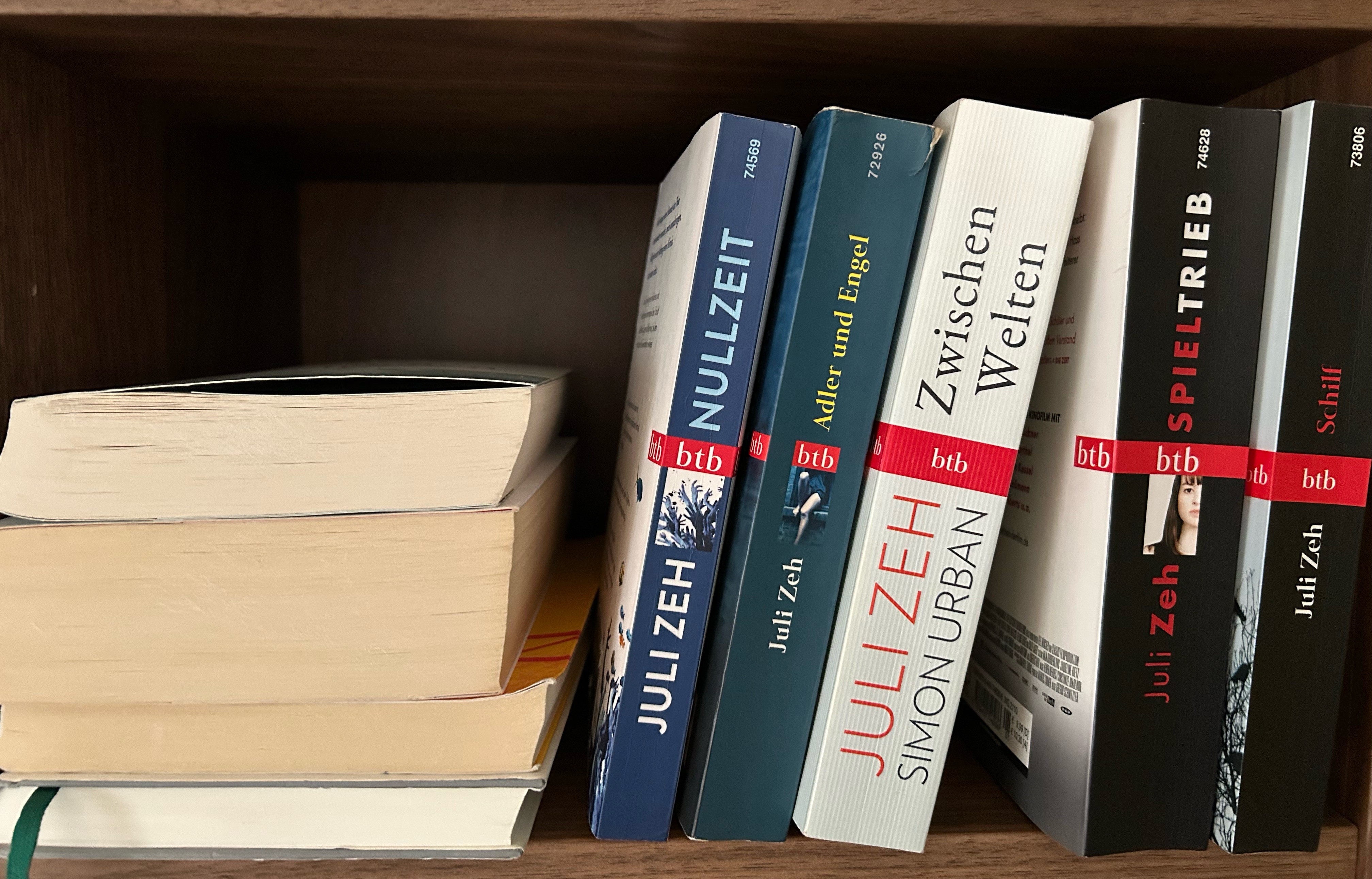
I knew about Juli Zeh and her work for a while. I started reading one of her books a couple of years ago but it did not stick at that time.
Recently, I picked it up again, and got hooked. Luckly, I found a couple of them available, bought them and now I’m reading in no particular order.
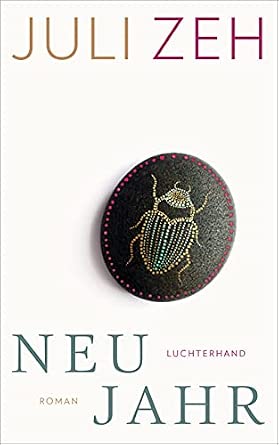
Neu Jahr, the book that I first read, felt like something precious that I had to make my own, swallow it and digest it. I am still getting new impressions and understandings from it. The main character is a man who seems trapped in his life, he wants to run away from something and is looking for something to make him whole at the same time.
His search leads him to places that he has seen before but forgot about. I liked how physical exhaustion coincided with the exhaustion of his emotional state. His marriage was not going very well, he was not connected to himself, had no energy, the children were more of a nuisance than a joy.
The morning that he took his bike and started cycling like a crazy person, he crossed not only physical barriers but also passed emotional milestones. Physically he was riding his bike going forward, uphill. Internally he was going backwards, deeper.
The journey back in time was strange. The memories we witnessed, gave us, the readers, a better understanding of his current state.
We walked alongside him as if visiting a museum or, why not, a cemetery where we read the names on the tombstones and try to imagine the life of the person, just by that name. This is what I try to do when walking in a cemetery.
In the end, we see that this whole internal journey represents a breakthrough for the main character. He is liberated.
As I said, the book is still being digested. I am still getting energy and ideas from it.
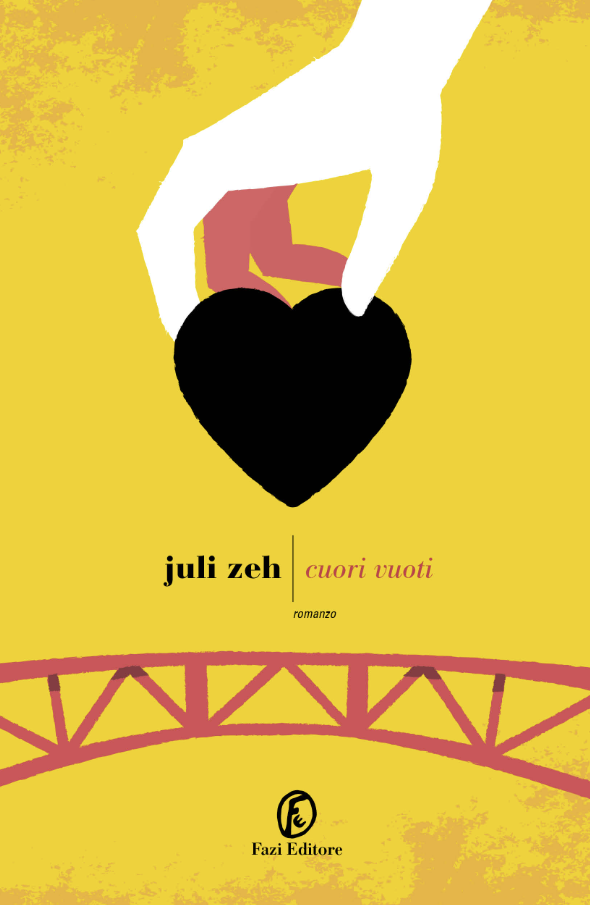
The next book that I read was Cuori vuoti or Leere Herzen. I found it in Italian so I read that version.
It is funny how the story is set to happen in a distant 2025, when the world would have become more dystopian than ever. I am now writing this in 2026 marching steadily into 2027 and the world is indeed a very strange place.
I can’t speak for the whole world, but from what I am getting, through different channels mostly on the internet - it is crazy out there.
I would not be surprised at all if the plot would be describing something that is happening in my reality. In one form or another. The scenario would feel familiar.
I liked the story a lot. It talks about people who choose to die. An agency called The bridge - is enabling them and it makes it so that their death is used for something - a terrorist attack for example. But in order to die, they have to pass several challenges. The challenges are there to prove that most people don’t really want to die. The tasks triage those who just need some help to continue with their life, from those who in fact want to stop living.
Death - a controversial subject but a fascinating one, to me. I am dying of curiosity to know what is happening after death, if you catch my drift :)
Probably this is why the story was so interesting for me. It felt like a spy movie where the characters show their real faces only in time, but it also felt like real life where people die in terrorist attacks that kill and destroy everything around them.
Isn't the death right coming in the same package with the living right?
Should humans be able to choose how and when they die?
Are the societies we live in really free?
If they are, how come dying is such a regulated, punishable and vile process? - these are questions that I still have.
This story takes us on a journey into a world where death became a commodity. I found it very interesting, provoking, eccentric and strange in a good way.
By now, I have made the decision to read all of Juli Zeh’s books and bought what I could find at the time.
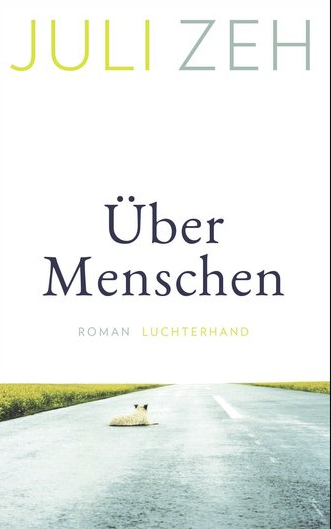
The next book that I read was Uber Menchen. This one, like the next one I would be reading, Unterleuten - was dense, detailed enough to have your imagination started and going. The characters felt like people I have met when in Germany or will be meeting somewhere down the line.
They are similar because they both treat socio-political themes.
Uber Menchen is talking about the far right. We enter a territory which is supposedly an extremist part of the country when a young woman is moving there, from Berlin.
The Covid events are also taking place, which adds another layer of strangeness to the feeling of being uncomfortable. As we progress into the story, we get to discover the humanity of that place. Those people start to look more like humans and less like some deformations or tumors.
One character in particular, the neighbour of the woman, who calls himself “the nazi of the village”, comes closer into view. We get to know his story, his strange convictions, his impulsive and unexpected gestures of help, his disease, craziness and his tragic death.
The way he departs from his life is rough, drastic and it suits him perfectly.
Unterleuten talks about the EU, a windmill project being brought in a village and the fundamental shifts it brings with it.
The invisible net of relations that holds that village together is little by little eaten away by conflicts. In my mind, I see a cell, we are looking at it through a microscope. All the living things are moving around bumping into each other, changing their own course and that of the others.
That is how reading this story felt like.
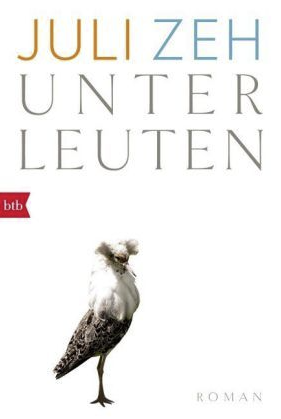
Juli Zeh zoomed in to show us the intricate connections and power plays at work in a village but also inside each of the characters. I found the characters very interesting. There are people rooted in that place just like the trees that surround them.
Some of them are new, coming in from outside, trying to settle in. Some of them are in between places, the city and the village.
In the end, when the tension is very high and the community is coming apart in different ways, a tragic event takes place - the death of one of the characters. This death holds meanings that I am yet to understand.The fact that someone would rather die and have the whole village poisoned with the decomposed flesh that is infecting into the water consumed by those people - it talks about the amount of pain, rage, disconnection from the others. The effect of negative emotions long term has no limits. It is so saddening.
I will be thinking about these stories for a while. I feel like reading is just the first step in this journey, the next step would be hearing and really understanding the meanings they carry.
My journey continues. I have several other books by Juli Zeh that I will be reading in search of that thing which makes books alive and makes me so curious about the writers and their work.